
One vendor · one platform · one point of accountability


Control
A facility’s balance of plant spans many auxiliary and process systems, and the value isn’t in any one of them: it’s in having them engineered, integrated, and maintained as one consistent whole. Innova Technologies engineers the balance-of-plant control for your facility so that every system uses common parts, every controller communicates cleanly with the others and with the plant’s HMI/DCS/SCADA and historian, and operators see the same interface and the same data wherever they are in the plant.
One vendor delivers it all, consistently, and stands behind it. Common parts, consistent programming, consistent graphics, and consistent documentation, backed by a single point of accountability across the plant’s control systems.
View White Papers
The Problem
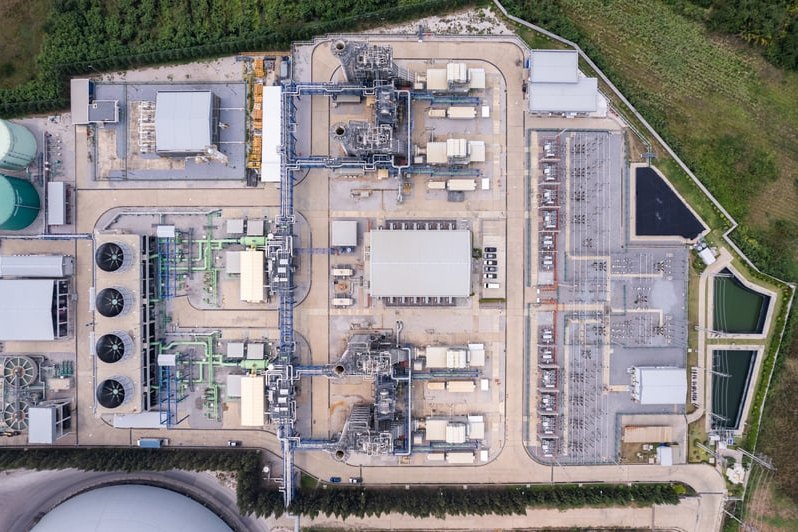
When a facility’s systems come from many vendors on different platforms, they speak different communication languages, often need translation hardware to talk to each other, and rarely present a single, full view of the plant in one HMI. The result is difficult integration, inconsistent documentation, operator confusion as interfaces change from one system to the next, few common parts, and difficult, costly maintenance.
The fix is to bring it under one umbrella: common parts across systems; controllers that talk to each other and to the plant HMI/DCS/SCADA and historian; a single vendor delivering everything consistently; and the same format across all documentation, I/O lists, control narratives, cause-and-effect matrices, consistent programming, and consistent graphics. An operator on either side of the plant then sees the same interface whether they are looking at a fuel-conditioning skid, a gas turbine, or any of several compressor trains.
Capabilities
Bring auxiliary skids, process systems, and machine controls onto one consistent platform with common parts, integrated with the plant HMI/DCS/SCADA and historian. Every controller communicates cleanly with the others and with the plant, so the balance of plant behaves as a single engineered whole rather than a set of isolated islands.
One graphics standard across every system in the plant, with consistent navigation, consistent alarm presentation, and consistent symbol and color conventions, so an operator moving from a fuel conditioning skid to a compressor train is reading the same language. Alarm rationalization and priority assignment are applied across the whole balance of plant rather than left at each vendor's defaults, which is usually where nuisance alarm load actually originates.
One programming standard, one graphics standard, and one documentation format across the plant, I/O lists, control narratives, and cause-and-effect matrices, so everything is easy to operate, maintain, and extend. Operators see the same interface and the same data wherever they are in the plant.
Every controller in the balance of plant feeds one data model with one timestamp, exposed to the plant historian, asset management, and reliability systems over standard interfaces rather than through per-vendor connectors. That is what makes cross-system analysis possible at all: correlating a skid event against a machine event requires that both were recorded in the same place, on the same clock.
The balance of plant is where the networking, external connections, and firewalls live. Innova implements the network architecture, segmentation, firewalls, and the configuration and rules that secure the plant's control systems, concentrated here where it belongs.
The balance of plant is where the plant network physically lives, so it is where the architecture gets decided. Zone and conduit segmentation aligned with IEC 62443, defined boundaries between IT and OT, controlled and logged remote access paths, and firewall configuration are engineered as part of the scope rather than added after commissioning. Concentrating this here is deliberate: security applied consistently at the network layer is stronger than security applied unevenly system by system.
Lube/seal oil systems, water-injection skids, fuel-conditioning skids, pumps and utilities, and other plant-specific systems, engineered into the integrated control rather than left as isolated, single-function islands. The scope follows your plant; the consistency and integration stay the same.
Common hardware across systems means a smaller spares inventory covering more of the plant, sourced from regional suppliers rather than from a single vendor per system. Standardized platforms also mean one set of engineering tools, one training requirement, and a lifecycle plan that can be executed in phases as hardware ages, instead of a series of unrelated forced upgrades on somebody else's schedule.
Why Innova Technologies
Technical Resources
FAQ
Common parts, one HMI experience, consistent documentation and programming, integrated cybersecurity, and a single point of accountability, engineered as one system for your facility.
Independent control for every turbine class.
Anti-surge, loadshare, performance, and capacity control.
Featured
Don’t see your industry?
If your equipment runs and your downtime costs more than the controls do, let’s talk
Single-source
A MESSAGE FROM JOHN KAZOUR, CEO
To our customers and partners,
For more than 50 years, our team has helped customers keep critical operations running. We built our reputation as Petrotech by taking responsibility for control systems on important rotating machinery.
As more industries came to us with similar challenges across power generation, compression, and hydro applications, our engineering team kept finding ways to solve them. Eventually, the business outgrew the Petrotech name.
We are entering our next chapter as Innova Technologies. The new name reflects the full scope of our work as a rotating machinery control systems specialist. We engineer controls around the machine, deliver complete projects from design through commissioning, and provide support that stays with the problem until it is solved.
Our name is changing, but the people, engineering experience, and commitment behind the work continue. Our responsibility to active projects and installed systems carries forward under the Innova Technologies name. Your current contacts remain the right place to start, and we will communicate directly if an administrative record requires an update.
We appreciate the trust you have placed in us over the decades, and we look forward to continuing that work as Innova Technologies.
CEO, Innova Technologies