
UL · ATEX · IECEx · NEC 500/505 Class/Div & Zone · purged/pressurized enclosures

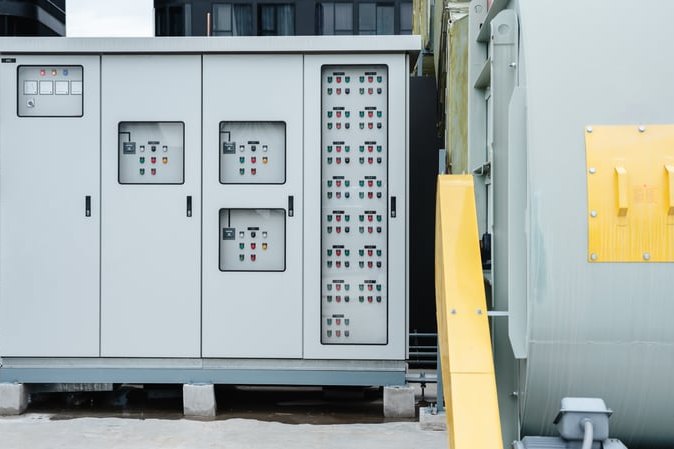
Control
We design, fabricate, and certify control panels and instrumentation systems for installation in classified hazardous locations, including ATEX Zone 1 and Zone 2, IECEx, NEC 500 Division 1 and Division 2, and NEC 505 Zone 0, Zone 1, and Zone 2 environments across oil and gas, refinery, chemical, and marine applications. Wherever flammable gases, vapors, or combustible dusts can be present, the control system must be designed and certified so it does not become the ignition source. Selecting the right protection concept, explosion-proof, intrinsically safe, increased safety, purge and pressurize, or flameproof enclosure, depends on the area classification, the equipment category, and the gas group and temperature class of the flammable atmosphere. Getting it wrong is not just a compliance failure; it means a potential ignition source in a live hazardous area.
Our hazardous-area engineering team holds the in-house expertise, the panel-shop certifications, and the relationships with third-party testing bodies required to design, fabricate, certify, and deliver control systems for any classified hazardous location. We maintain a UL-listed panel shop, work with FM and IECEx-authorized certification bodies, and have delivered ATEX-certified control systems to operating platforms and facilities across multiple continents. Our designs are not adapted from generic industrial panels: they are purpose-engineered for the specific hazardous area classification, gas group, and temperature class of each installation, and we develop the control logic to IEC 61131-3 so proven strategies deploy on the platform that best fits your lifecycle, with full logic access and no license walls.
The Problem
The regulations governing electrical equipment in hazardous locations, ATEX Directive 2014/34/EU, the IECEx Scheme, NEC Article 500 and 505, and the harmonized IEC 60079 series, are detailed, technically demanding, and frequently misunderstood. Area classification determines the zone or division, but equipment selection then requires matching the equipment’s category, gas group (IIA, IIB, IIC for gases; IIIA, IIIB, IIIC for dusts), and temperature class (T1 through T6) to the ignition properties of the specific substance in each location. A panel certified for Group IIA (propane equivalent) is not acceptable in a Group IIC (hydrogen or acetylene) environment, even if it carries an ‘Ex’ marking. A mismatched temperature code, an incorrect protection method, or a gland or seal installed wrong can fail inspection, delay startup, and expose the operator to serious liability.
Fabrication adds another layer: explosion-proof (Ex-d) enclosures must maintain specific flameproof joint dimensions, increased-safety (Ex-e) enclosures have specific terminal creepage and clearance requirements, and purge and pressurize (Ex-p) systems must hold positive pressure with safety functions that de-energize on loss of purge, none of which can be achieved by adapting a standard industrial panel. Proprietary certified packages solve the compliance problem but create vendor lock-in. Our open-architecture approach breaks that cycle, fully certified hazardous-area control with the transparency and ownership you deserve.
Capabilities
We design control panels for installation in ATEX Zone 1 (explosive atmosphere likely during normal operation) and Zone 2 (explosive atmosphere unlikely but possible) using the appropriate protection concepts for each zone. Zone 1 installations typically use Ex-d (explosion-proof), Ex-p (purge and pressurize), Ex-e (increased safety for terminals only), or Ex-i (intrinsically safe) concepts; Zone 2 installations may add Ex-nA (non-sparking) or Ex-nC (sealed device). All ATEX panels carry the correct CE marking with ATEX category, gas group, and temperature class notation.
NEC Article 505 allows use of the IEC Zone classification system in North American installations, enabling use of ATEX/IECEx certified equipment on international projects that will be installed in North America. We design panels for NEC 505 Zone 0, Zone 1, and Zone 2 installations, applying the appropriate IEC 60079 protection concepts and internationally certified components, so a single panel design can be certified for both international (ATEX/IECEx) and North American (NEC 505) projects.
International projects outside the European Union require IECEx scheme certification for electrical equipment in hazardous locations, particularly in the Middle East, Asia-Pacific, Africa, and South America. We work with IECEx-authorized certification bodies to obtain IECEx certificates for custom-engineered control panels, and maintain a library of IECEx-certified component evaluations for commonly used panel components. IECEx certificates are provided in the project documentation package.
Intrinsically safe systems limit the electrical energy in the field wiring to levels too low to ignite a flammable atmosphere, enabling simple field instruments (thermocouples, pressure transmitters, level sensors) to be installed in Zone 0 or Division 1 locations without explosion-proof housings. We design intrinsically safe field circuits using safety barriers (Zener barriers) or galvanic isolators, performing the entity-parameter calculations that verify the combination of barrier, cable, and field instrument is certified as an IS system. IS system documentation includes the entity-parameter calculation records required for third-party audit.
North American projects use the Division system under NEC Article 500, where Division 1 (flammable substance present under normal conditions) and Division 2 (present only under abnormal conditions) replace the European Zone classification. We design control panels for NEC Division 1 and Division 2 installation using UL-listed or FM-approved explosion-proof enclosures, conduit seals, fittings, and terminal boxes. Our UL-listed panel shop certification covers panels assembled for NEC Division 1 applications.
Explosion-proof (Ex-d) enclosures allow ignition to occur inside the enclosure while preventing the explosion from propagating outside through flame-path joints held within certified dimensional tolerances. We design and fabricate Ex-d enclosures for junction boxes, instrument housings, and small control panels where the protection concept requires an explosion-proof housing. Flameproof joint dimensions are designed and verified per IEC 60079-1 or UL 1203 as applicable, and documented in the enclosure design file.
Purge and pressurize protection (Ex-p or NFPA 496 purge types) uses positive pressure inside the enclosure to prevent the entry of flammable atmosphere, allowing standard non-classified industrial control components to be used inside the panel. We design Type X (reduce classification to non-hazardous), Type Y (reduce Zone 1 to Zone 2), and Type Z (reduce Zone 2 to non-hazardous) purge systems with automatic shutdown on loss of purge pressure, pre-purge sequence control, and pressurization monitoring, designed to IEC 60079-2 or NFPA 496 as applicable.
The control panel is only part of the hazardous area installation, field instruments, junction boxes, conduit and fittings, cable entries, and all field wiring must also meet the area classification requirements. We specify and supply hazardous area field instruments (pressure and temperature transmitters, control valves, solenoid valves) with the appropriate area classification certificates, and design the field wiring layout including conduit seal locations, grounding arrangements, and cable gland specifications. Installation drawings specify all required field verifications for the completed installation.
Why Innova Technologies
Technical Resources
FAQ
Conventional VMS protection, engineered and integrated as part of your controls scope, one platform, one HMI, and one historian for the machine and its vibration data.
Independent control for every turbine class.
Anti-surge, loadshare, performance, and capacity control.
Featured
Don’t see your industry?
If your equipment runs and your downtime costs more than the controls do, let’s talk
Single-source
A MESSAGE FROM JOHN KAZOUR, CEO
To our customers and partners,
For more than 50 years, our team has helped customers keep critical operations running. We built our reputation as Petrotech by taking responsibility for control systems on important rotating machinery.
As more industries came to us with similar challenges across power generation, compression, and hydro applications, our engineering team kept finding ways to solve them. Eventually, the business outgrew the Petrotech name.
We are entering our next chapter as Innova Technologies. The new name reflects the full scope of our work as a rotating machinery control systems specialist. We engineer controls around the machine, deliver complete projects from design through commissioning, and provide support that stays with the problem until it is solved.
Our name is changing, but the people, engineering experience, and commitment behind the work continue. Our responsibility to active projects and installed systems carries forward under the Innova Technologies name. Your current contacts remain the right place to start, and we will communicate directly if an administrative record requires an update.
We appreciate the trust you have placed in us over the decades, and we look forward to continuing that work as Innova Technologies.
CEO, Innova Technologies